Raccoon & Wildlife Removal in Guelph
Humane raccoon removal, squirrel and rodent exclusion, skunks under decks, bats and birds in vents — across Guelph and Wellington County. One-way doors instead of traps where it works, every entry point sealed, and the damage repaired so it does not happen again next spring.
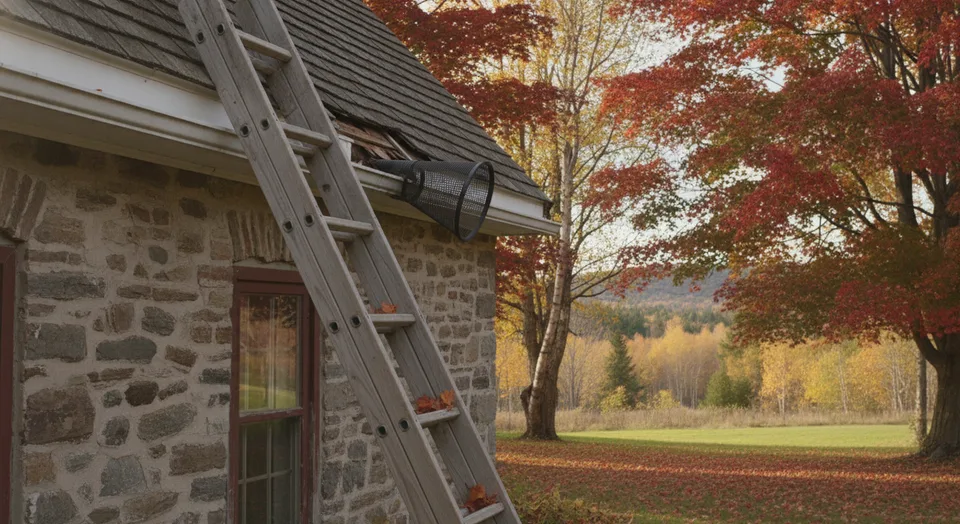
Most wildlife calls in Guelph are one of four problems, and they are not interchangeable. Something heavy is walking above the bedroom ceiling at dusk or just before dawn — that is a raccoon, and in spring it is almost certainly a female with a litter. Something light is scratching in the soffit or the wall in the early morning — that is squirrels. There is a smell under the deck and a fresh hole at the edge of the skirting — that is a skunk. Or something small is in the kitchen wall at night, and the entry is a gap you cannot see from the ground. The animal tells you almost nothing on its own. What the animal is doing, where it got in, and what month it is decide the whole job. This is the booking line for a vetted Guelph wildlife removal company that works the humane way: identify the entry, get the animals out alive, seal the building so nothing gets back in, and fix the damage. You describe what you are hearing and where, you get a written quote, and nobody starts until you have agreed to it.
What We Handle
Raccoons, squirrels, skunks, bats, birds and rodents in and under Guelph homes — removal, exclusion, entry-point sealing and the repair work afterwards.
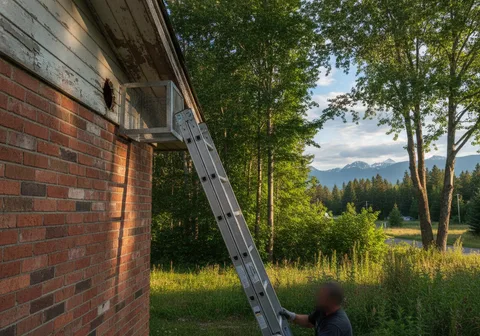
Raccoon Removal
The most common wildlife call in Guelph. Attic dens, chimneys and soffit entries — animals out alive, litters reunited with the mother, and the roof line sealed so it does not repeat.
Raccoon removal in Guelph →
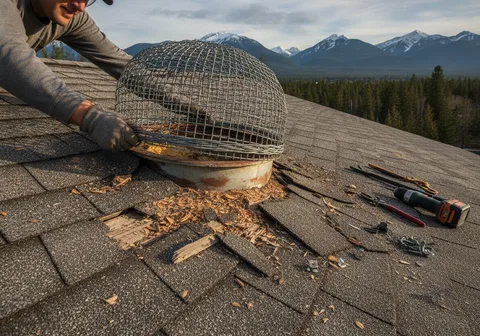
Squirrel & Rodent Removal
Grey squirrels, red squirrels, chipmunks, mice and rats. Fast scratching in the soffit or the wall, chewed wiring, and a gap the size of a quarter that nobody can see from the driveway.
Squirrel removal in Guelph →
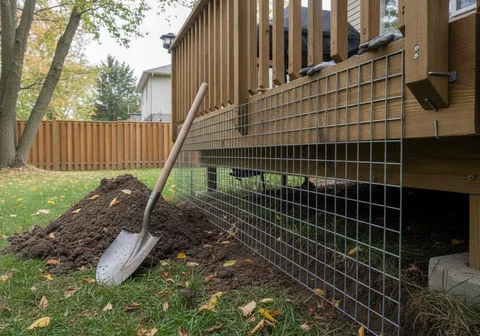
Skunk Removal & Deck Exclusion
A smell under the deck and a fresh hole at the edge of the skirting. Removal, then a buried screen barrier — the only fix that holds against an animal that digs.
Skunk removal in Guelph →
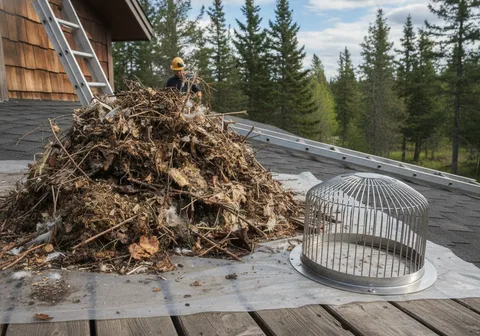
Bat & Bird Removal
Bats in a century-home attic or a county barn, and starlings and sparrows packed into roof, dryer and bathroom vents. Timed exclusion and proper vent guards, not foam and hope.
Bat & bird removal in Guelph →
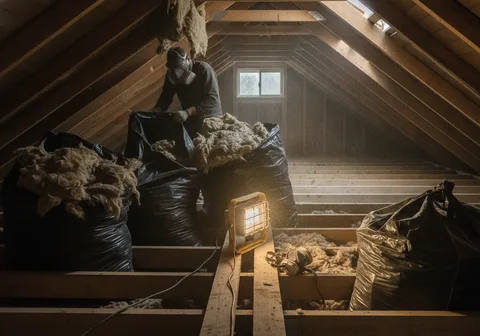
Attic Restoration & Insulation Cleanup
What is left after the animals are out — flattened and contaminated insulation, latrine areas, chewed wiring and crushed ducts. Removed, cleaned, repaired and re-insulated.
Attic restoration in Guelph →
Why Guelph Has a Raccoon Problem Specifically
Century homes in The Ward, Downtown, Old University and Exhibition Park. Guelph's older core is exactly the building stock raccoons are built to exploit. The pre-1940 brick houses through St. Patrick's Ward, the streets around Exhibition Park and the Old University neighbourhood have roof edges where the soffit meets the fascia at a joint that was never tight and has had eighty years of freeze-thaw working on it. Push there with forty pounds of animal and it opens. Add brick chimneys with clay liners and no cap, dormer returns with a soft corner, and roof valleys where two additions meet at an angle nobody flashed properly, and you have four separate ways into the same attic. Inside, the framing is knob-and-tube era: open joist bays, board sheathing, and loose or batt insulation that a raccoon can push into a den hollow in an afternoon. This is why Guelph gets more attic raccoons per capita than a city of the same size built after 1970.
The tree canopy is the other half of it. Guelph has an unusually mature urban forest for its size — big silver maples, Norway maples and black walnuts on the older streets, many of them older than the houses. That canopy is a highway. A raccoon or a grey squirrel does not climb your brick wall if it can walk a limb onto your roof, and on a lot of Guelph streets there is a limb over the roof. It also means the pressure never really stops. Seal one house on a block and the animal moves three doors down, which is why a proper exclusion job is about your whole roof line and not just the hole you found.
Spring means babies, and that changes everything. From roughly February through June, a raccoon in a Guelph attic is overwhelmingly a female that has chosen your insulation as a nursery. Squirrels run a similar calendar with an extra litter in late summer. This is the single most important thing to get right, and it is where cheap work goes wrong. If you seal the hole and the mother is outside, she will tear a new hole in the roof to get back to the litter — and she will succeed, because a determined adult raccoon can go through a soffit panel in minutes. If she is inside and you seal her out of the exit, you get the smell six weeks later. The correct sequence is to locate the den, remove the young by hand, place them where the mother will collect them, let her move them herself, and only then close the building. It takes longer and it is the only version that works.
The Speed and Eramosa corridors and the ravine edges. The two rivers run right through the middle of the city and the greenbelt and ravine edges push in behind whole streets. Riverside Park, the Speed River trail through Downtown and Norm Jary, the Eramosa corridor out toward Victoria Road, the Hanlon Creek and Preservation Park edges on the west side, the Kortright and Arkell wetland fringe to the south — all of it is continuous cover, and the houses backing onto it are the first ones hit. If your yard ends at a treeline or a trail, you are not dealing with an occasional visitor, you are on a travel route. That does not mean you have a bigger problem. It means the sealing has to be complete rather than partial, because the pressure is constant.
The south and east subdivisions are a different call entirely. Westminster Woods, Clairfields, Pine Ridge and Grange Hill East are twenty-five years old at the outside. Tight soffit, continuous vented aluminum, sealed sheathing, engineered truss attics with no easy den space. Attic raccoons are rare there. What those streets get instead is skunks and groundhogs under decks, sheds and the front steps, because the lots back onto stormwater management ponds and naturalised buffer strips, the grading leaves a gap under every deck, and nobody skirts a deck to below frost. The call from Westminster Woods is almost always a smell, a hole at the edge of the deck, and a dog that has been sprayed. Different animal, different fix, and the fix is a buried screen barrier rather than anything to do with your roof.
Serving Guelph & Surrounding Areas
Raccoons, skunks and bats are the animals most associated with rabies in Ontario. The Public Health Agency of Canada and Ontario both publish what to do after a bite, a scratch or any direct contact — the answer is always to wash the wound and call a doctor, not to wait and see. If a bat has been in a room with a sleeping person, a young child or someone who cannot say whether they were touched, that is reported to Wellington-Dufferin-Guelph Public Health, and the bat should be contained rather than released if it can be done safely. The City of Guelph is the right contact for a dead or injured animal on a road or in a park, and for anything involving a city-owned tree. The Ontario SPCA publishes general guidance on living with urban wildlife and on humane, exclusion-first approaches.
Frequently Asked Questions
How much does raccoon removal cost in Guelph?
A straightforward raccoon removal from a Guelph attic — assessment, a one-way door on the active entry, the return visit to confirm it is empty, and that entry sealed — usually lands in the $450 to $900 range. A spring job with a litter to hand-remove runs higher because it is more visits and more hands. Full roof-line exclusion on a century home in The Ward, where there are four or five weak points rather than one, is quoted separately again, and attic cleanup and insulation replacement is its own number. Planning ranges for all of it are on the 2026 cost guide, and you get a firm written quote after the roof has actually been looked at.
Can you just trap the raccoon and drive it out to the country?
No. Ontario's rules say live-captured wildlife has to be released within 1 kilometre of where it was caught, within 24 hours, and only on private land with the owner's permission. Trucking a raccoon out to the country is not allowed, and in spring it usually leaves a litter behind in the attic to starve and smell. That is why the job here is a one-way door on the entry so the animal leaves on its own, any babies reunited with the mother by hand, and the entry sealed so nothing gets back in.
Something is in my attic. Is it raccoons or squirrels?
Time of day and weight. Raccoons are heavy, slow and loud, and they move at dusk and again before dawn — people describe it as someone walking, or a bowling ball rolling. Squirrels are light, fast and scratchy, and they are busiest for the first two hours after sunrise and again in late afternoon. Mice and rats are quieter still, mostly after dark, and usually in a wall rather than overhead. Chewing on wood at night is almost never a raccoon. None of that is guesswork you have to do alone — describe what you are hearing and when, and it gets narrowed down on the phone before anyone comes out.
Do you kill the animals?
No. This is humane exclusion work. The method is to find every way in, install a one-way door on the active entry so the animal leaves on its own and cannot get back, confirm the space is empty, then seal it permanently. Young animals are removed by hand and reunited with the mother rather than separated from her. Nothing about this trade works by killing the animal anyway — an empty attic with an open hole is just a vacancy, and something else moves in by the following spring. The seal is the job.
It is spring and I think there are babies up there. What happens now?
Tell whoever you call, because it changes the entire approach. Between roughly February and June a female raccoon in an attic almost always has a litter, and squirrels run the same pattern with a second round in late summer. A one-way door on its own is wrong in that situation: the mother goes out, the young stay in, and you have a much worse problem in two weeks. The correct job is to locate the den, remove the young by hand, put them in a heated reunion box near the entry, and let the mother carry them out to her backup den herself — they almost always have one. The building gets sealed after that is confirmed, not before.
Which parts of Guelph and Wellington County do you cover?
All of Guelph — Downtown and The Ward, Old University, Exhibition Park, Junction, Sunny Acres, Waverley, Riverside, Willow West, Parkwood Gardens, Kortright Hills, Hanlon Creek, Westminster Woods, Clairfields, Pine Ridge and Grange Hill East — plus the surrounding county: Puslinch, Aberfoyle, Morriston, Arkell, Eden Mills, Rockwood, Ariss and the Guelph/Eramosa townships.
How fast can someone get out?
Most Guelph calls are seen within a day or two, and same-day happens often enough that it is worth asking. The jobs that get pushed to the front are an animal loose inside the living space, a bat in a bedroom, a skunk trapped in a window well, an animal down a chimney or stuck in a wall cavity, and anything where children or a pet have had contact. Scratching in the attic is urgent in the sense that damage is accumulating, but it is not a tonight problem — the roof still has to be inspected in daylight.
Ready to Get Started?
Call or text 548-290-8013 (photos welcome) or send the form for a written quote for wildlife removal in Guelph.